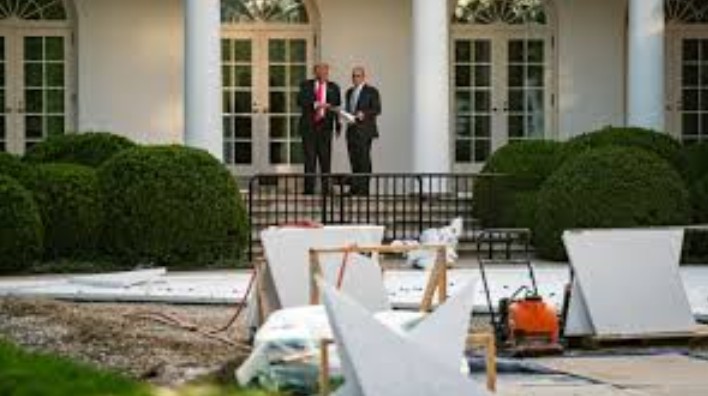
No wonder Donald Trump has pushed so hard to remake the White House. To casual observers, the renovations look cosmetic. Practical, even. But to those who understand symbols — especially Americans and Britons old enough to remember what the White House once represented — the motivations run much deeper.
The first clue lies underfoot.
The renovation of the White House Rose Garden is nearly complete. Where soft green lawn once stretched beneath presidents’ feet, cobblestone paths now dominate the space. Trump has repeatedly defended the change as practical: grass turns muddy, heels sink, events become inconvenient. On paper, it sounds reasonable. Almost thoughtful.
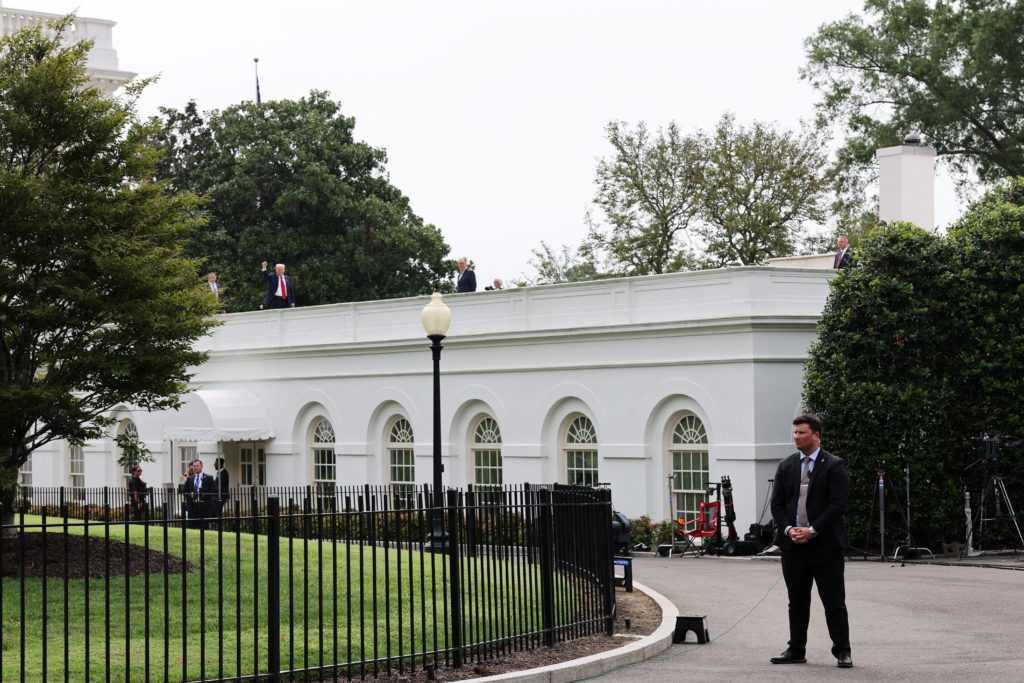
Many quietly suspect that Melania Trump, known for her attention to aesthetics and formality, had significant influence. High heels and manicured visuals matter in modern political theater. But the Rose Garden has never been just a venue. It is a memory bank.
For generations, presidents resisted altering its essential character. The lawn remained — through wars, scandals, and social change — because it symbolized continuity. John F. Kennedy hosted moments of youthful optimism there. His daughter’s wedding took place on that very grass. The annual turkey pardoning ceremony unfolded there year after year, a gentle ritual of national whimsy. Even Barack Obama preserved its openness, understanding that some spaces are meant to be inherited, not redesigned.
Replacing the lawn with stone is more than a design choice. It is a philosophical one. Grass yields. Stone asserts.
And just as the Rose Garden reaches completion, the second revelation emerges.

Plans for a new ballroom in the East Wing — complete with gilded columns, crystal chandeliers, and unmistakable grandeur — have begun to circulate. The visual language is unmistakable. Gold. Symmetry. Spectacle. Paired with cobblestone paths outside, the message is clear: this is not merely renovation. It is transformation.
To Trump, the White House has never been only a national institution. It is a stage. A brand. A reflection of authority expressed through permanence and opulence. Where previous presidents saw stewardship, Trump sees authorship. Where others preserved memory, he inscribes identity.
For readers aged 45–65, this stirs something complicated. Many remember when the White House felt like a shared inheritance — imperfect, evolving, but restrained by respect. The worry now is not about taste. It is about intent. When personal style overrides collective memory, division deepens quietly, not loudly.
Trump may genuinely believe he is improving the White House. Making it safer, cleaner, more elegant. But history rarely judges leaders by what they meant to do. It judges them by what they replaced — and what they could not bring back.
The Rose Garden lawn is gone. The ballroom is coming. And with every stone laid and chandelier hung, the White House drifts further from a place shaped by many presidents into one shaped unmistakably by one man.
That, perhaps, is the true motivation few are willing to say aloud.
🎯 Textbook Finish: Canelo Alvarez Lands the Perfect Combination to Knock Out Sergey Kovalev


