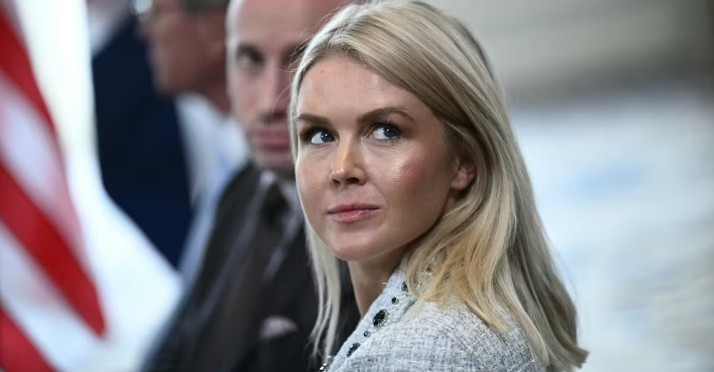
To many Americans, the idea sounds unthinkable. A White House press secretary—especially the youngest in history—not taking a salary. In a city where power is often measured in paychecks, the decision by Karoline Leavitt has quietly puzzled even seasoned political watchers.
But for those who understand how influence truly works in Washington, the answer lies not in money—but in three intangible assets that may shape her future far longer than any paycheck ever could.
1. A Historic Title That Can Never Be Taken Away
When Donald Trump publicly praised Karoline and appointed her press secretary, he didn’t just give her a job. He gave her a permanent line in history: the youngest White House press secretary ever.
For US and UK audiences over 45, who have watched political careers rise and fall over decades, this kind of distinction matters. Titles fade. Salaries end. But “youngest in history” is forever.
Karoline’s sharp delivery, calm under pressure, and unusually clear thinking in hostile press rooms turned her age from a liability into a headline. And Trump’s open admiration—rare and highly selective—signaled trust. In Washington, trust from power is a currency money can’t buy.
2. Trust at the Center of Power

Trump did something more valuable than writing a check: he placed Karoline visibly at his side. In public. On camera. Under pressure.
That trust reshaped how the press—and political insiders—saw her overnight. She wasn’t just defending the administration; she was representing the voice of the presidency. For future roles in media, politics, consulting, or leadership, that credibility will open doors long after this chapter ends.
Older viewers recognize this pattern well. Many of history’s most influential figures didn’t build their legacy on early salaries—but on proximity to decision-making when it mattered most.
3. A Work Ethic That Changed the Narrative

The final asset wasn’t granted—it was earned. During her pregnancy, Karoline reportedly slept as little as four hours a night, continuing to prepare briefings and manage press battles few veterans would envy. Even more striking, she returned to work less than a week after giving birth.
This wasn’t performative toughness. It reshaped how colleagues, critics, and even opponents viewed her. In an era when dedication is often questioned, her actions silenced skepticism without a single speech.
For audiences who remember when public service demanded sacrifice without applause, her commitment felt familiar—and deeply resonant.
Why the Salary Didn’t Matter
Karoline Leavitt didn’t walk away empty-handed. She walked away carrying visibility, trust, and a reputation forged under extraordinary pressure.
Money pays bills.
History pays dividends.
And in Washington, those who understand the difference rarely stay small for long.
Trump’s Stunning Tribute: Three Unprecedented Moves After Charlie Kirk’s Death
Less than twenty-four hours after the shocking death of Charlie Kirk, former president Donald Trump made three sweeping decisions that stunned both supporters and critics alike — decisions so dramatic they almost seemed to pull Kirk’s memory back into the center of America’s political stage.
The Tragedy
On Wednesday, Kirk, a staunch ally of Trump and a rising conservative voice, was killed during an attack at a University of Utah event. The crowd, horrified, watched chaos unfold. News of his death spread like wildfire, shaking both college campuses and the political world. For Trump, it was more than the loss of a supporter — it was the silencing of a figure he had once called “the heartbeat of America’s youth.”
Trump’s First Move: A Dark Video Statement
Just hours after the tragedy, Trump released a somber video statement. In it, he described Kirk’s death as both heartbreaking and enraging, calling it “a dark moment for the United States.” He praised Kirk’s ability to connect with young Americans, claiming few could match his influence.
But the most striking promise came at the end: Trump vowed to hunt down those responsible. For grieving conservatives, the words were not just comfort — they were a call to action.
Second Move: Flags Lowered Nationwide
In a move usually reserved for presidents, military heroes, and national tragedies, Trump ordered the U.S. flag to be flown at half-staff.
Not just at the White House.
Not just in Washington.
Every public building, every military post, every naval base, and every government vessel across the United States and its territories.
It was a symbolic gesture of national mourning — but also one that pushed Kirk into the realm of state-level recognition. For supporters, it was validation of Kirk’s impact. For critics, it was yet another reminder of Trump’s ability to wield symbolism as power.
Third Move: A State Funeral on the White House Lawn?
The boldest of all Trump’s decisions came in his final statement. He floated the idea of giving Kirk a state funeral on the White House lawn — a level of honor rarely, if ever, bestowed on a private citizen.
It was shocking, polarizing, and unprecedented. Could such a funeral really happen? Would Washington’s traditions bend for Trump’s ally?
Whether the idea takes root or not, the message was clear: Charlie Kirk’s death would not be treated as ordinary. Trump intended to mark it as national.
A Legacy Recast in 24 Hours
For many Americans, the last day has been a whirlwind of grief, outrage, and spectacle. In less than 24 hours:
-
A tragedy struck.
-
A nation mourned.
-
And Trump rewrote the script, elevating Kirk from conservative activist to near-martyr in the eyes of his movement.
Whether seen as genuine mourning or political theater, the three moves shook the country.
Because in death, as in life, Charlie Kirk remained tethered to Trump — and Trump, once again, seized the stage to ensure the world was watching.

