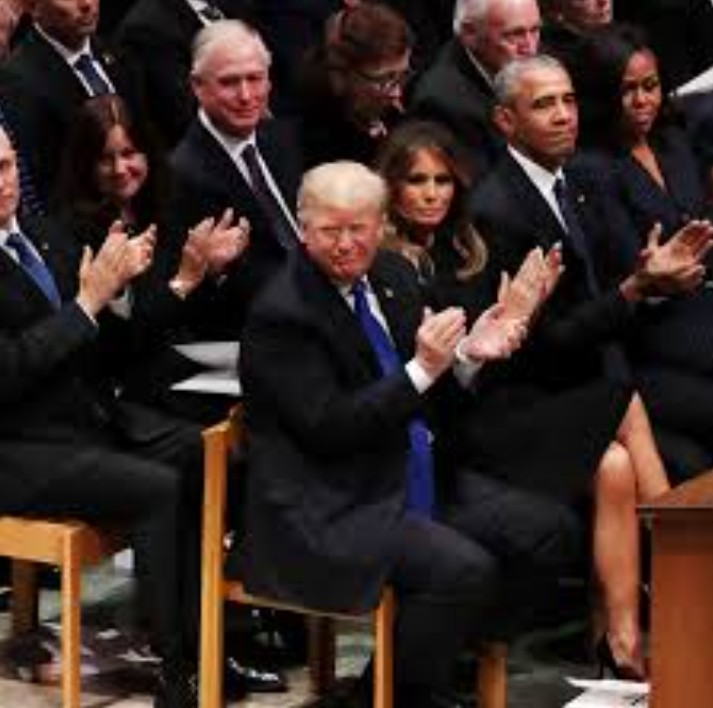
For anyone who has followed Donald Trump over the past decade, one detail stood out immediately at the Pope’s funeral—not where he was seated, but how he reacted. Or rather, how he didn’t.
This was the same Trump who once openly mocked Joe Biden for being placed in the 14th row at Queen Elizabeth II’s funeral, turning protocol into political theater. Yet at the funeral of Pope Francis, Trump found himself seated in the third row—uncomfortably close to a restroom, far from the front rows reserved for reigning monarchs and heads of state.
There was no complaint. No visible irritation. No pointed remark afterward.
Instead, Trump’s behavior revealed a very different purpose for attending.
The first sign came before the funeral even began. Trump made a deliberate decision not to bring J. D. Vance with him. Insiders noted this absence as intentional. Trump reportedly felt uneasy about having previously brought Vance along on a Vatican visit during the Pope’s lifetime, a moment later viewed as politically charged. After the Pope’s passing, Trump moved quickly to express something rare for him—public contrition. He issued a statement praising the Pope as “a good man who loved the world,” carefully stripped of politics, sounding more like an apology than a tribute.
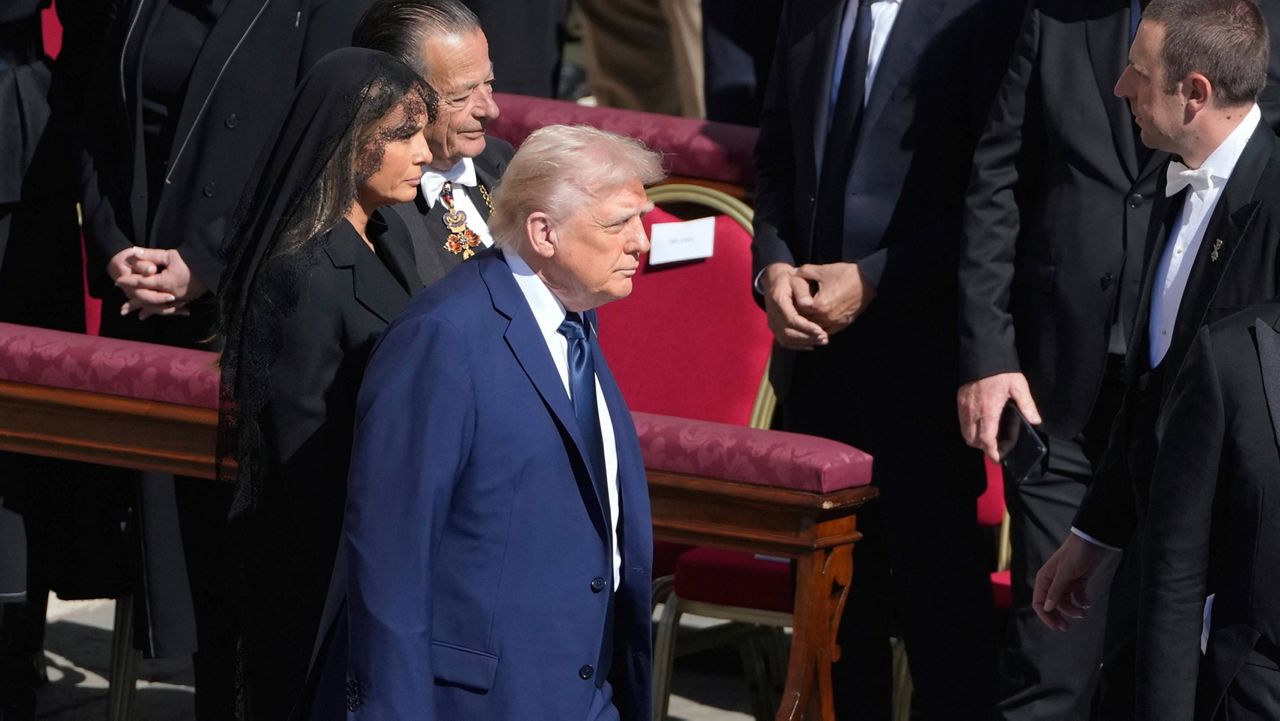
The second signal was Trump’s strict discipline during the ceremony itself. Known for commanding attention wherever he goes, Trump did the opposite this time. He refused to engage in side conversations, declined political discussions, and made it clear to those around him that he was there for mourning—nothing else. Witnesses noted that he asked aides to prevent any disruptions and discouraged attempts to turn the moment into a spectacle.
Even Melania Trump reflected this restraint. Trump reportedly asked her to switch from high heels to flat shoes—a small but telling gesture, signaling humility, respect, and a desire not to stand out physically or symbolically during the solemn rites.

The third—and perhaps most revealing—element lies in Trump’s understanding of the Pope himself. Despite years of ideological clashes between them, Trump appeared acutely aware of Pope Francis’s character. The Pope was known for rejecting displays of hierarchy, privilege, and ego. In that context, the seating arrangement was not a slight—it was a statement aligned with Francis’s lifelong message.
Trump, for once, seemed to grasp that reality.
For older readers in the US and UK who remember when funerals were moments of restraint rather than performance, this scene carried weight. It showed a man often defined by confrontation choosing silence. A figure known for demanding respect instead accepting protocol. A politician stepping briefly out of politics.
Trump didn’t attend the Pope’s funeral to be seen in the front row. He attended to be present, to acknowledge past tensions, and perhaps to show that he understood—too late or not—that this was not a stage for power.
Sometimes, the loudest message is the one left unspoken.

